Definition: What is a personal emergency signal system (PNA)?
A personal emergency signal system (PNA) is an electronic system designed to trigger an alarm in emergencies. It is used in particular when workers are working alone in situations involving increased or critical risk—such as in field service. Its purpose is to enable rapid assistance in the event of accidents or medical emergencies.
When are personal emergency signal systems used?
Personal emergency signal systems are used in situations where people are working alone or under conditions of increased risk. However, it is important to note that not every type of lone work automatically requires a PNA. Whether such a system is necessary and appropriate depends on the specific risks and is determined as part of the workplace risk assessment. Typical applications for personal emergency signal systems include, for example, lone work in the field, as well as activities in hazardous environments, such as on construction sites or during the operation and maintenance of technical equipment.
What types of PNA systems are there?
Personal emergency signal systems are generally classified into stationary and mobile systems based on their design and area of application:
PNA for stationary systems (fixed workstations)
Stationary personal emergency signal systems are permanently installed in the building and provide protection for fixed work areas.
PNA for mobile systems (workplaces not tied to a specific location)
Mobile personal emergency signal systems use portable devices or apps. They are flexible in their application and are therefore particularly relevant for field staff.
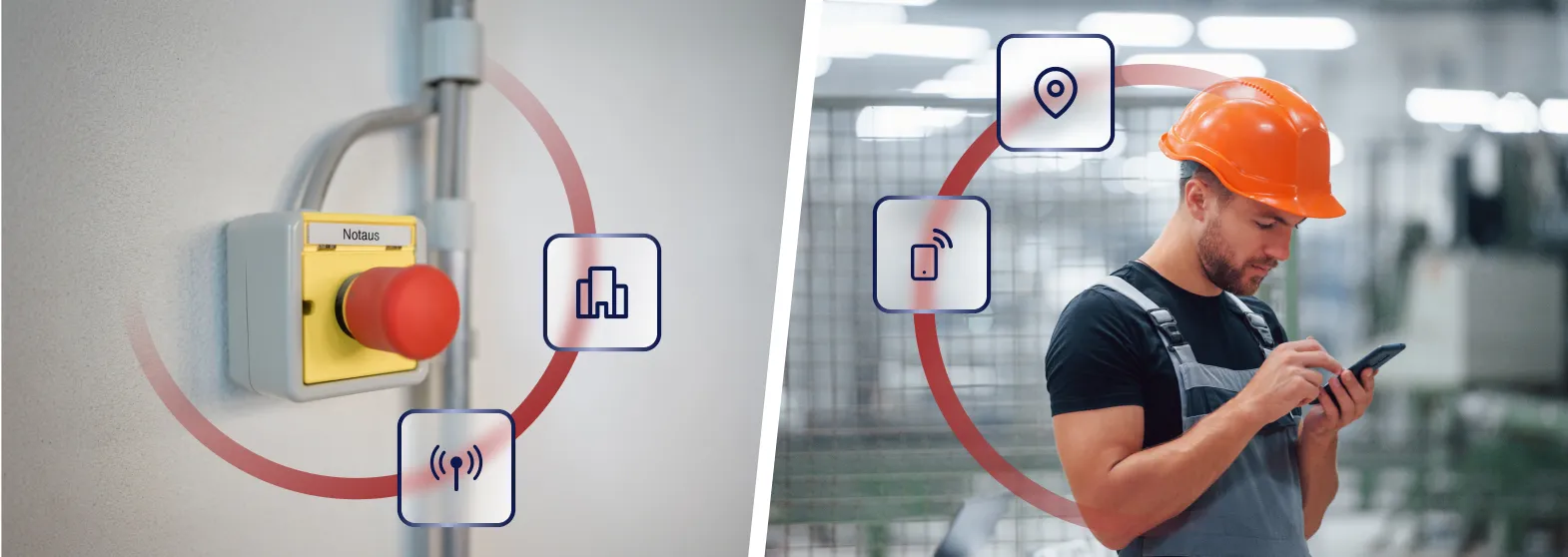
How does a personal emergency signal system work?
A personal emergency signal system detects emergencies both automatically and manually:
- Sensors (automatic alarm triggering): Depending on the device used, built-in sensors automatically detect dangerous situations. They detect a lack of movement—such as that caused by fainting—as well as sudden jolts that may indicate a fall.
- Manual alarm function: In an emergency, the worker can manually trigger an alarm at any time by pressing a button.
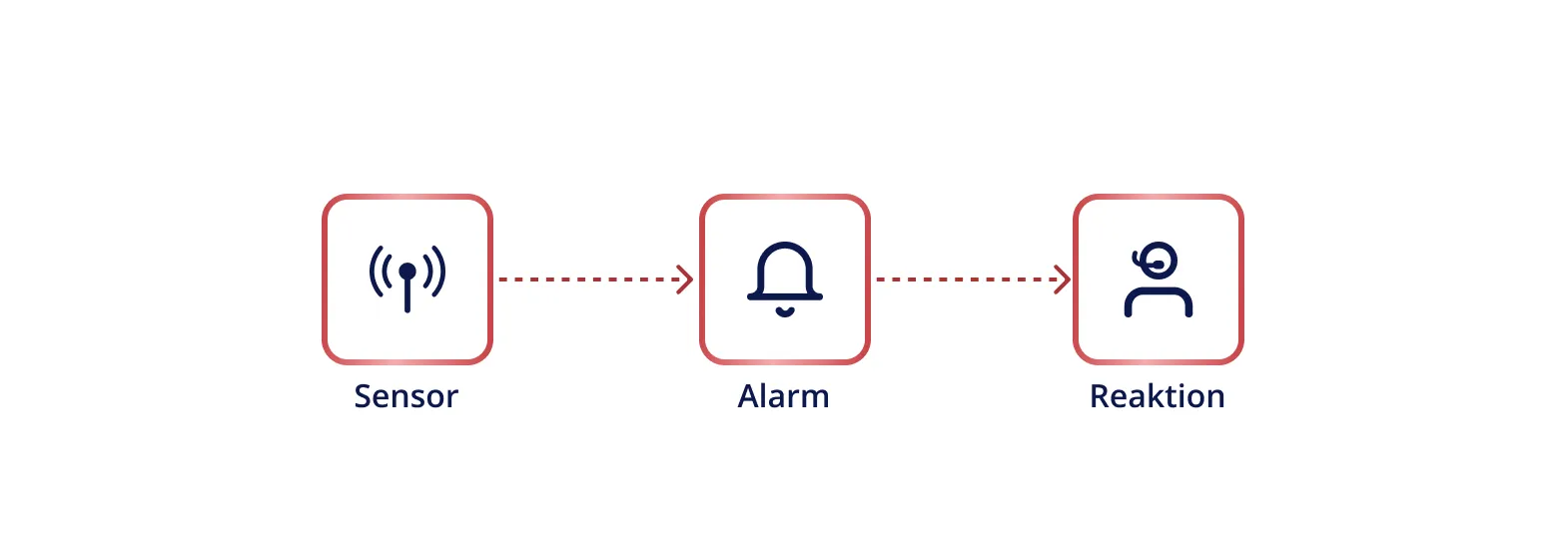
As soon as the sensors are triggered or the manual function is activated, the system immediately sends a signal to a designated control center to initiate the predefined emergency response measures.
What are the benefits of personal emergency signal systems?
Personal emergency signal systems offer companies and employees significant benefits in occupational safety:
- Rapid assistance in an emergency: Thanks to manual and automatic emergency call activation, no valuable time is lost in an emergency before rescue measures are initiated.
- Enhanced safety: Potential emergencies involving individuals working alone or in hazardous environments can be detected more quickly, which increases both the sense of personal safety and actual safety.
- Support for legal requirements: Personal emergency signal systems can help employers define and implement appropriate protective measures for lone workers. DGUV Rule 112-139 includes, among other things, a calculation scheme for assessing workstations where employees work alone. However, it does not provide a blanket guarantee of legal compliance. The individual risk assessment conducted at the workplace remains crucial for ensuring tailored protection.
- Integration into digital systems: Depending on their technical design, digital PNAs can be integrated into existing operational and safety systems.
-
Learn more about how established protective measures work reliably in practice: Implementing Risk Assessments: Turning Planning into an Effective Safety Process
How do PNA systems differ from alternative safety solutions?
To better understand how a personal emergency signal system works, it helps to distinguish it from other safety and organizational solutions:
- Difference from pure communication: Standard communication tools such as smartphones or radios are primarily used for the routine exchange of information. While they can be part of a safety solution, on their own they typically lack automatic alarm functions and a clearly defined alarm and rescue chain.
- Difference from time-tracking systems: Time tracking is used exclusively to document work hours and attendance. It offers no protective or sensor functions in the event of an accident.
- Difference from tracking: Tracking solutions are primarily used for location tracking. With a PNA, the focus is on triggering an alarm in an emergency and initiating predefined rescue measures. When location data is collected and transmitted depends on the system used.
Focus of a PNA: The core function of a PNA is the rapid, reliable emergency alerting and rescue of individuals in hazardous work environments.
What role do mobile safety solutions play in field operations?
During mobile assignments, employees often work alone and at varying locations. Safety measures must therefore function reliably even outside of fixed work sites.
However, for a personal emergency signal system (PNA) to trigger a reliable alert in an emergency, the underlying rescue process must function seamlessly in everyday situations.
The approach to occupational safety has evolved: It is no longer sufficient to merely have emergency plans in place passively. Transparent documentation in field service helps companies review established safety measures and ensure their practical implementation is traceable. Since documented safety in field operations is a key component of this implementation, the alert system must be seamlessly integrated into the workflow. Without this practical integration, it quickly becomes clear why safety plans in field service often fail.
Depending on the risk assessment, mobile devices and app-based solutions can support such alarm and rescue processes. It is crucial that technical availability, alarm transmission, the receiving center, location tracking, and the subsequent rescue chain align with the requirements of the specific operation.
The Entry software helps companies digitally organize mobile field operations and integrate alarm processes into their workflows. This includes, among other things, check-ins, a dead man’s switch, and the transmission of relevant information in the event of an alarm.