Safety concepts exist – but not effective
Security concepts have long been established in many organizations. Risk assessments are documented, measures are defined and responsibilities are formally regulated. Safety is therefore clearly shown on paper.
In practice, however, the picture is different: Security concepts exist – but often do not work in everyday life. The problem is not in “if” but in “how.” Why this is the case is particularly evident in everyday operations.
Why safety measures don't work in everyday life
Safety concepts rarely fail due to a lack of requirements. They fail because they are not consistently implemented in everyday life. This is also reflected in practice: The decisive factor is not whether measures are defined, but whether they are actually implemented and comprehensibly documented during use – a central criterion that is also used in BG ETEM procedural principle for occupational health and safety management systems is fixed.
Typical causes:
- Lack of feedback in use: It is often unclear whether measures have actually been implemented.
- No integration into existing processes: Safety processes run in parallel rather than as part of the work process.
- Unclear responsibilities: Responsibility is defined but not clearly assigned in everyday life.
- Lack of commitment: Feedback is optional or not provided at all.
What does that mean in practice:
- Security processes must be visible in everyday life
- Feedback must not be optional
- Responsibilities must be clearly defined
The most common mistake in thinking: Security means extra work
A key reason for lack of implementation lies in perception: Security measures are often seen as an additional effort.
New processes are avoided if they:
- Extend the process
- Require additional steps
- Be perceived as an “extra task”
Safety concepts rarely fail due to a lack of technology. They fail because organizations avoid additional complexity. This is exactly where a structural problem arises: Safety is treated as an addition – not as part of the work process.
As a result, measures are circumvented, shortened or not carried out at all.
At the same time, practice shows that digital processes reduce complexity when they are properly integrated – instead of increasing it.
Safety concepts are thought out under ideal conditions
Many safety concepts are developed under stable conditions:
- clear processes
- available infrastructure
- predictable situations
The reality in the field service is different:
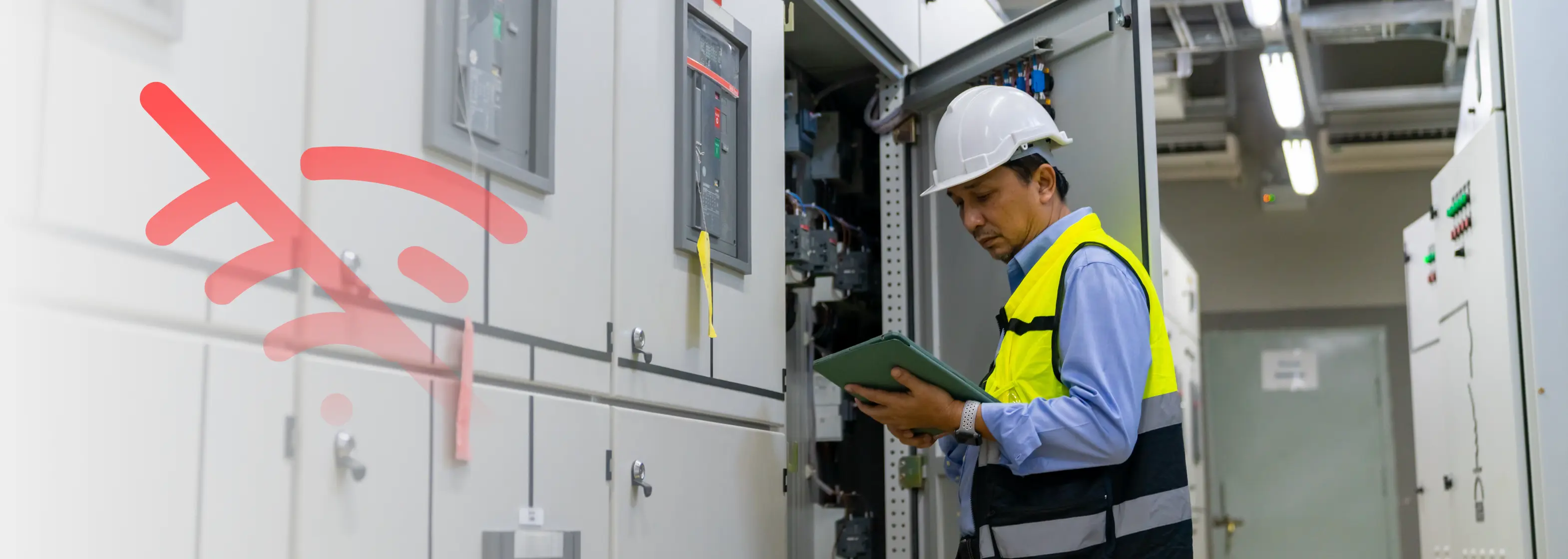
- no or poor reception
- Time pressure in action
- changing locations
- unforeseeable situations
It is precisely these conditions that determine whether security measures work – or not.
If processes only work under ideal conditions, they fail in everyday life. This is particularly true for topics such as Working alone decisively. And is used in the context of Security processes in the field particularly visible.

What distinguishes functioning security processes
Organizations where security works in everyday life differ structurally.
Typical features:
- Feedback is an integral part of the process: Status reports are automatic or binding.
- Safety measures are integrated into everyday work: Not an additional process, but part of the mission.
- Responsibility is clearly assigned to: Everyone knows who has to react and when.
- Processes are comprehensible: Processes are documented and can be checked at any time.
The difference is not in the concept but in the implementation.
Practical example
A technician works alone in a cellar room with no reception.
There is no provision for feedback on his status.
For the control center, it is unclear whether the deployment is going according to plan.
In an emergency, the situation goes unnoticed for a long time.
A structured process with clear feedback mechanisms would close exactly this gap.
Conclusion: Security doesn't fail because of concepts – but because of implementation
Safety concepts are necessary. But they alone are not enough. The decisive factor is whether they work in everyday life.
That means:
- Safety must be integrated into processes
- Feedback must be binding
- Responsibility must be clearly defined
Safety is not a document. It's a living process. The next step shows how this gap is particularly visible in risk assessments: Implement risk assessment correctly in field service
How security processes can be implemented in field service in practice and what role digital solutions play in this:
→ Learn more about Entry
Would you like to map security processes in the field in a comprehensible way and without additional effort?