Safety concepts alone are no longer enough today.
Blog

‍Documented safety in field service is no longer an option

25.06.2026

Overview at a Glance

  • Safety concepts alone are no longer enough today.
  • The key is whether safety processes function verifiably in daily operations.
  • Documentation becomes a central component of occupational safety, compliance, and corporate governance.
  • Lack of verifiability increases liability and organizational risks.
  • Modern safety processes combine transparency, clear responsibilities, and structured documentation.

Safety concepts are in place – so why do risks still arise?

Many companies have risk assessments, operating instructions, training, and emergency plans. Legal requirements are known, responsibilities are defined, and safety measures are documented. Nevertheless, everyday reality often paints a different picture.

After an operation begins, feedback is often missing. Information is passed on by phone or not documented at all. Decisions are made ad hoc and are difficult to trace later. In an emergency, it's often unclear when contact was last made, what measures were initiated, or who was informed.

This is precisely where the assessment of occupational safety is currently changing. Previously, the focus was on, whether protective measures are in place. Today, the question increasingly comes to the forefront, whether companies can demonstrate that these measures were actually implemented in daily operations.

This development particularly affects organizations with technical field service, lone workers, or operations in critical infrastructures. According to the current Salesforce study, 74% of field service employees, that their workload has increased. At the same time, 66% that their operations have become more complex. With increasing complexity, the demands for transparency and traceable safety processes also rise.

Source: Salesforce – State of Service Report 2024

Why Field Service Safety is Being Re-evaluated

Today, safety is far more than just an operational issue. Regulatory requirements, rising audit expectations, and stricter governance guidelines increase pressure on companies to organize their processes in a traceable manner.

Particularly, operators of critical infrastructures and municipal companies are increasingly dealing with questions such as:

  • Who was last in contact with the employee?
  • Was the assignment started properly?
  • When was the last update?
  • How were deviations handled?
  • Who was informed in case of emergency?

These questions can only be answered if safety processes are consistently documented.

In brief

Today, field service safety is no longer assessed solely based on existing measures. What is crucial is whether security processes can be implemented in a documented, traceable, and verifiable manner.

The real problem: Safety is often not verifiable

Most organizations already have:

  • Risk assessments
  • Safety briefings
  • Emergency plans
  • Work instructions
  • Organizational protective measures

The real problem arises between planning and implementation.

In day-to-day operations, the following are often missing:

  • Feedback from operations
  • Current status information
  • Documented escalations
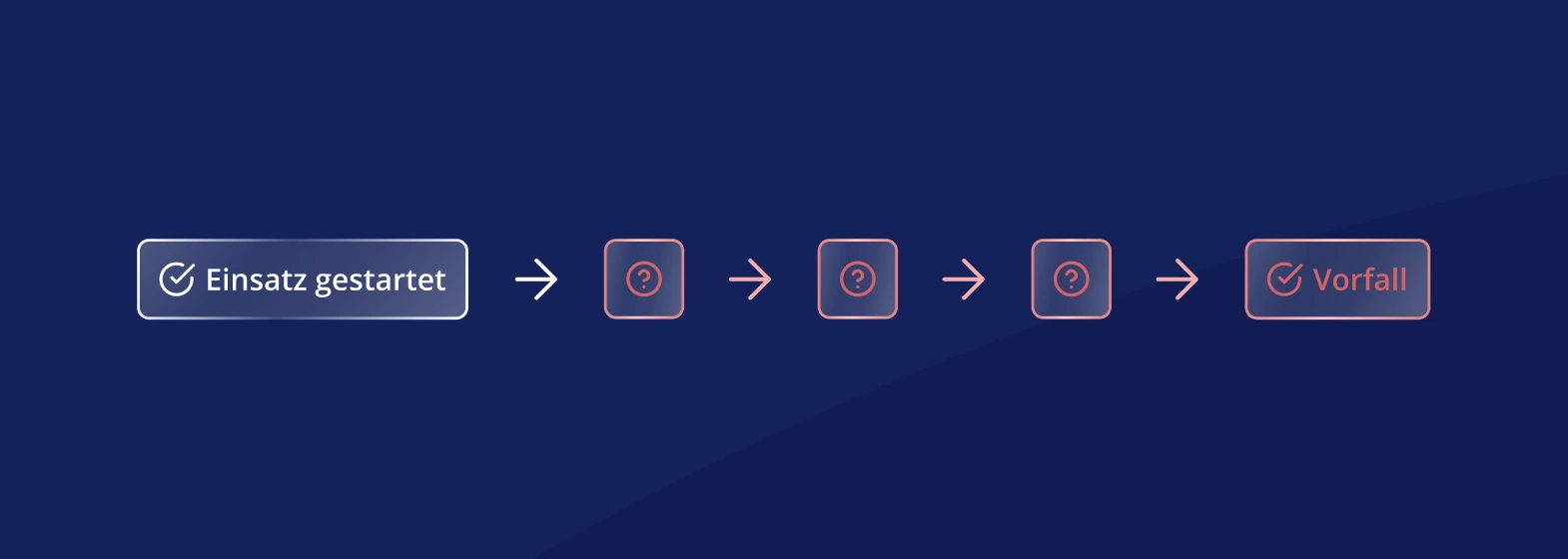
  • Traceable response chains

This creates a gap between the defined process and actual execution. This gap becomes particularly apparent in retrospect. When an incident is investigated or an audit is conducted, the statement "We have a process for that" is not sufficient. What is needed is verifiable evidence.

It's not a lack of measures that creates the risk. It's a lack of verifiability that creates the risk.
Fehlende Nachweisbarkeit im Außendienst

Which companies are particularly affected

The larger the technical field service and the higher the responsibility for critical systems, the more important structured safety processes become.

This is particularly relevant for:

  • Municipal utilities
  • Energy providers
  • Network operators
  • Telecommunications companies
  • Water and wastewater utilities
  • Gas providers
  • Infrastructure operators
  • Industrial companies with lone workers

Here, employees regularly work alone or at remote locations. At the same time, there are high demands on occupational safety, documentation, and operational responsibility.

Use case: How Entry supports the field service

Use case

How Entry supports the field service

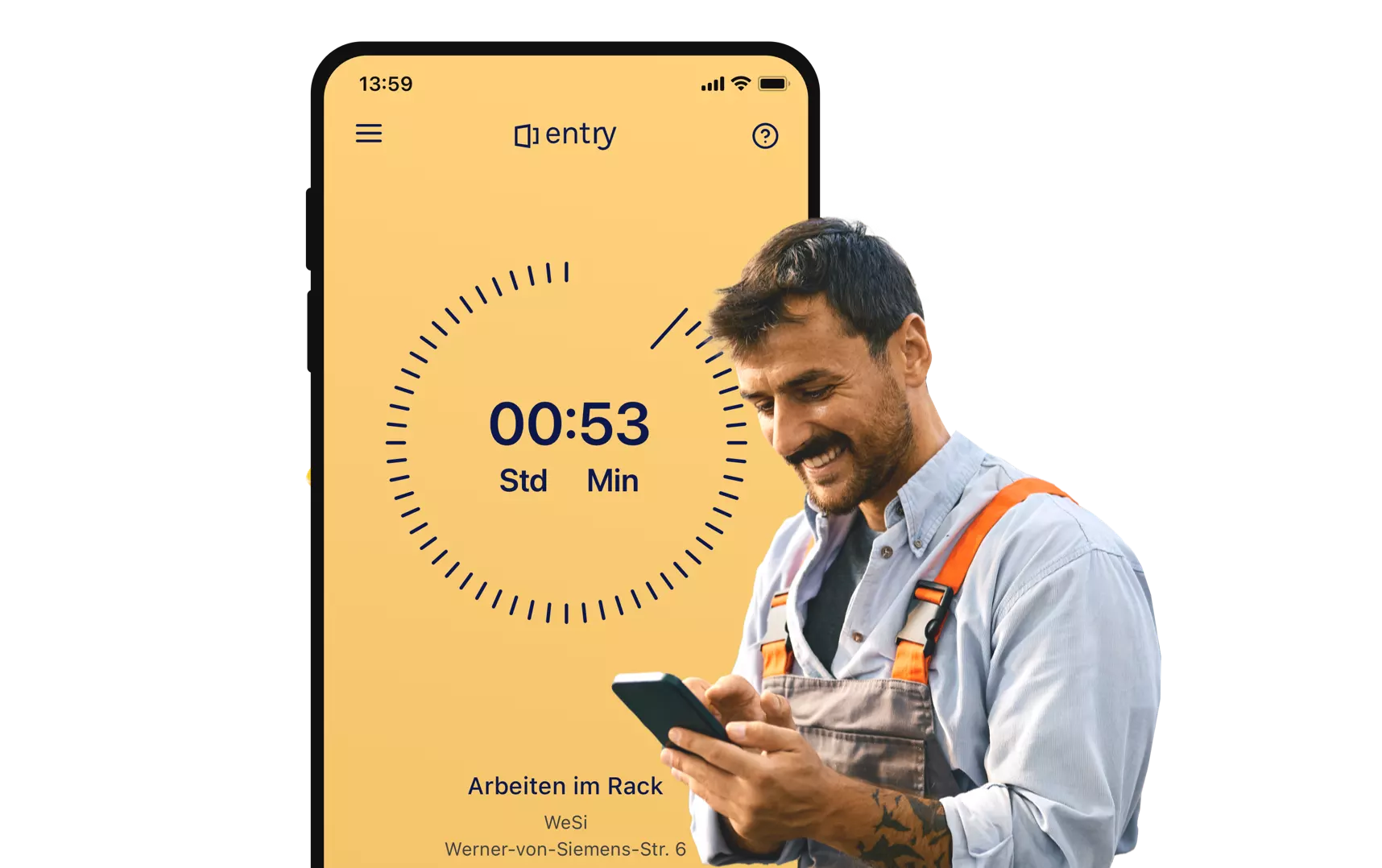
One of our customers in the telecommunications industry uses Entry to digitize access control to important systems. Before the introduction of Entry, the processes were time-consuming. After implementation, the company was able to reduce access times, to significantly increase security standards and to increase field staff satisfaction through clear and transparent processes.

What traceability specifically means

Traceability doesn't mean collecting as many documents as possible. It means being able to reconstruct what happened during an operation at any time.

This includes:

Operation Status

  • When did the operation begin?
  • When was it completed?
  • Who was involved in the operation?

Reporting

  • Was the start of work confirmed?
  • Was regular reporting provided?
  • Was the operation properly concluded?

Deviations

  • When was a report missed?
  • What escalation was triggered?
  • Who was informed?

Emergencies

  • When was an alarm triggered?
  • Who received the notification?
  • When did the response occur?

Definition

Documented safety means that organizations can always track when an operation took place, what feedback was received, and how deviations or emergencies were responded to.

Common misconceptions in safety organizations

"Dead man's switches are for monitoring."

This assumption persists to this day. In reality, dead man's functions are designed to protect employees. Their purpose is to detect critical situations early and automatically initiate escalations – not to control the behavior of individuals.

"Our documentation is sufficient."

Risk assessments and safety policies document the planning. However, they do not automatically answer the question of whether these measures were actually implemented in daily operations.

"Someone will react in an emergency."

Without defined escalation processes, it often remains unclear,

  • who is informed,
  • when a response is required,
  • who takes responsibility.

Especially in critical situations, this uncertainty costs valuable time.

Why a lack of documentation becomes a risk

A lack of traceability has far-reaching consequences.

Liability risk

Responsibility always remains with the organization. If the implementation of safety processes cannot be traced, the organizational risk increases.

Limited Auditability

Internal and external audits require traceable documentation. Without it, queries and additional effort arise.

Loss of Transparency

Subsequent decisions are difficult to reconstruct, leading to the loss of important information.

Dependency on Individuals

Knowledge often resides with individual employees. If they are unavailable, information gaps emerge. This increasingly makes safety an organizational and leadership issue.

Why this topic belongs at the executive level

Safety is no longer solely the concern of occupational safety specialists or operational managers.

For executive management, it's about:

  • Operational Responsibility
  • Risk Minimization
  • Auditability
  • Traceability
  • Organizational Resilience

Liability rarely arises only after an incident. It often arises where processes have been defined, but their implementation is not traceable.

Key Takeaway

Safety risks rarely arise from a lack of rules. They emerge where organizations cannot prove whether rules were actually followed.

Case Study

A technician is working alone at a remote technical site. The assignment was planned and approved. However, after work begins, there is no response.

For the organization, it is initially unclear

  • whether the work is proceeding as planned,
  • whether there are technical problems,
  • whether a dangerous situation has occurred.

A structured safety process automatically detects the lack of response, informs the responsible persons, and documents all steps. This transforms an unclear situation into a traceable process.

Manage technician deployments safely and efficiently

Manage technician deployments safely and efficiently

With Entry powered by Conntac, you can digitally secure your field operations – from dead man's switch to access management.
Manage technician deployments safely and efficiently

Safety as Part of Corporate Governance

A modern safety organization does not consist solely of policies. It connects operational processes with manageability.

These include:

  • clear responsibilities,
  • documented processes,
  • transparent operational information,
  • defined escalations,
  • traceable decisions.

safety thus becomes an integral part of corporate management.

What Organizations Need Now

1. Structured Processes

Safety must not depend on individuals.

2. Clear Responsibilities

Each escalation step requires a clearly defined responsibility.

3. Consistent Documentation

Safety-relevant information must remain fully traceable.

4. Practical Implementation

Processes only ensure safety if they are actually used in daily operations.

The European Agency for Safety and Health at Work (EU-OSHA) is examining this development as part of its Europe-wide OSH Pulse survey, which includes more than 28,000 employees. The results show that digitalization and new forms of work further increase the need for transparent and traceable safety processes.

Source: EU-OSHA – OSH Pulse Survey

Key Takeaway

Safety processes must be visible. Feedback must not be optional. Responsibilities must be clearly defined.

Flow strukturierter Prozess

Conclusion: Safety Becomes a Management Responsibility

The requirements for occupational safety are continuously evolving. At the same time, expectations for transparency, documentation, and traceability are increasing. cTherefore, organizations must view safety more comprehensively. Not as a collection of individual measures. But as a structured, documented, and traceable process. Merely describing safety sets requirements. Verifiably organizing safety creates transparency, controllability, and reliable foundations for decision-making.

Do you want to document safety processes transparently and clearly define responsibilities?

Download our playbook Systemic Thinking for Field Service Safety or schedule a personal demo of Entry.

Photo of Johanna Kugler
Johanna Kugler

Content Marketing Manager

Become a Conntac Insider

Subscribe to our LinkedIn newsletter The Conntac Chronicles to receive relevant insights and perspectives on current topics and challenges in the field of modern service solutions.

Woman high fiving another person