


A technical assignment can be perfectly planned and still stall on-site. The order is created, the time slot is reserved, and a technician is scheduled. However, the required authorization is missing at the location. The access information is outdated. Or it is unclear who needs to respond when a deviation occurs.
Operational excellence in field service means performing technical assignments under real-world conditions in a way that is reliably safe, complete, and traceable. This requires preparation, qualification, access, response, and documentation to function as a cohesive process.
At a glance
- A planned assignment is only ready for execution once all information, qualifications, authorizations, and access requirements are in place.
- Many delays occur during handovers between dispatch, the central office, site managers, and field staff.
- Clear status and escalation paths help to identify deviations early and address them in a targeted manner.
- Access, status changes, and completion must be clearly assigned to an order and documented in a traceable manner.
- Key performance indicators such as first-time completion, wait times, and recurring causes for cancellation make process quality measurable.
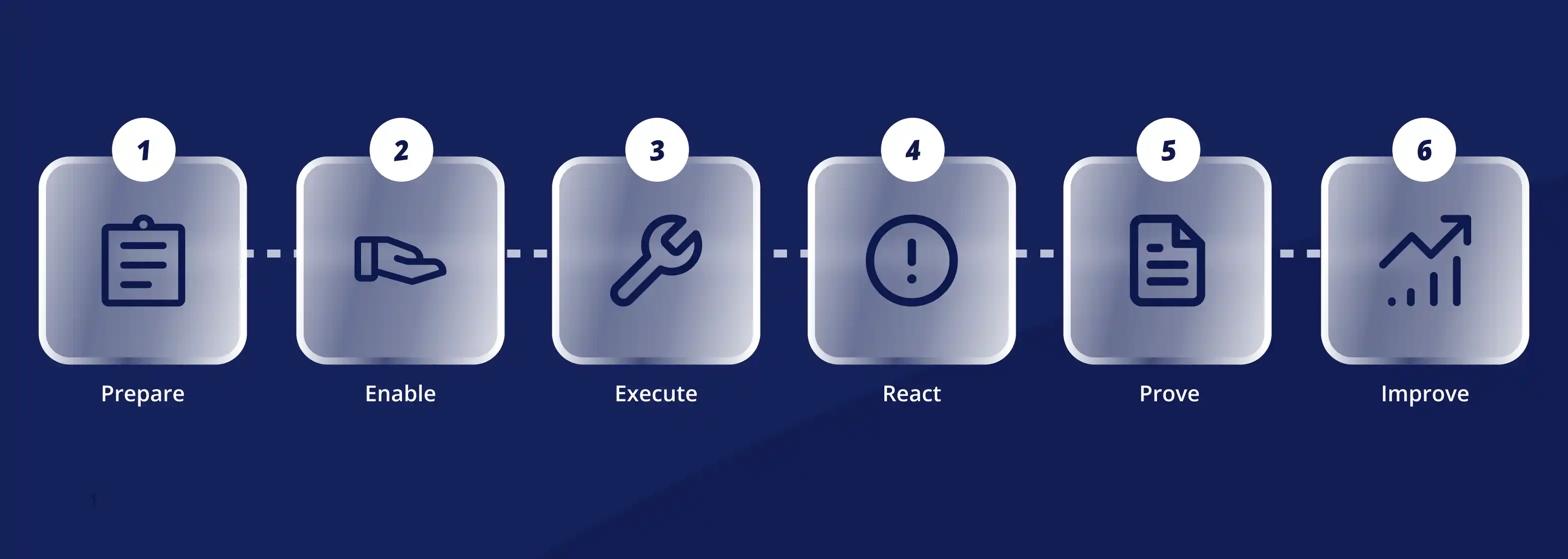
- Six steps form a resilient service chain: Prepare, Enable, Execute, Respond, Document, and Improve.
What does operational excellence in technical field service mean?
Operational excellence refers to an organization's ability to carry out technical assignments reliably, safely, and with as few avoidable interruptions as possible. The focus is on the entire workflow surrounding the technical task – from preparation to evaluation.
High utilization or optimized route planning alone does not indicate how resilient processes are. A tightly scheduled plan loses its value if technicians are faced with locked doors, have to organize approvals over the phone, or need to hunt for missing information. Our know-how article provides a fundamental overview of tasks, roles, and digital support for Field Service.
Operational quality is reflected in how many assignments:
- start as planned,
- be carried out safely,
- proceed without avoidable interruptions,
- be completed in full on the first attempt, and
- be documented in a traceable manner afterwards.
A supplementary key performance indicator for this is First-Time-Completion . While First-Time-Fix evaluates the technical solution during the first visit, First-Time-Completion covers the entire assignment: access, authorization, execution, reporting, and completion.
When is a field service assignment truly ready for execution?
A scheduled assignment initially answers three questions: What needs to be done? When should it take place? Who is taking on the job?
An assignment is only ready for execution once all the prerequisites for the actual work have also been clarified:
- The order and requirements are complete.
- Site information is up to date.
- The assigned person has the necessary qualifications.
- Roles and permissions are clearly assigned.
- Access is arranged for the scheduled time window.
- Safety protocols and response procedures are known.
- Status and completion can be documented in a traceable manner.
Especially for maintenance, troubleshooting, inspections, and planned work, this operational preparation determines whether a dispatch becomes an executable assignment. How digital processes work together in this regard is shown in the article on the digitalization of field service.






.webp "Verifying safety processes in the field")
.webp "Implementing risk assessments for field service")

