

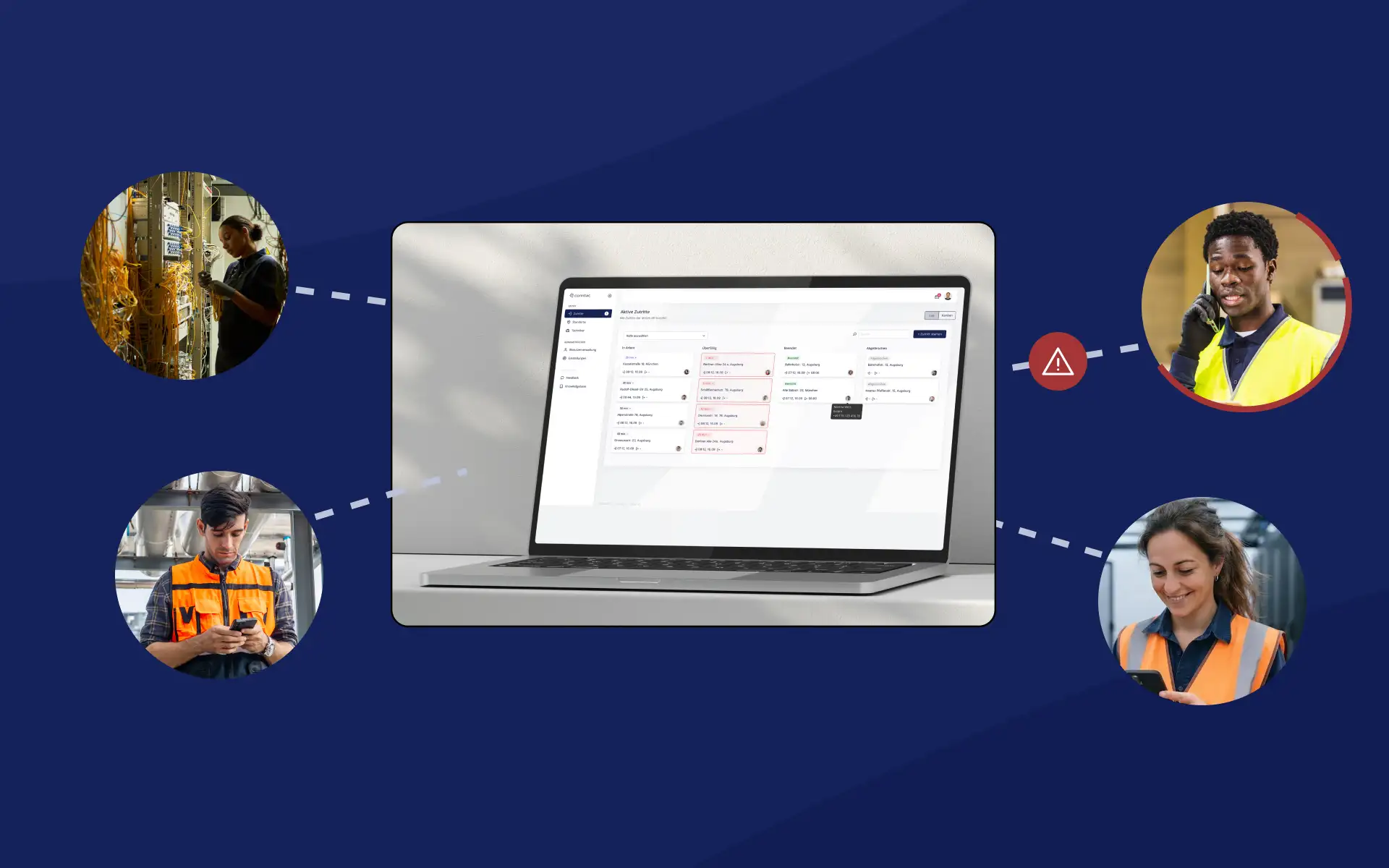
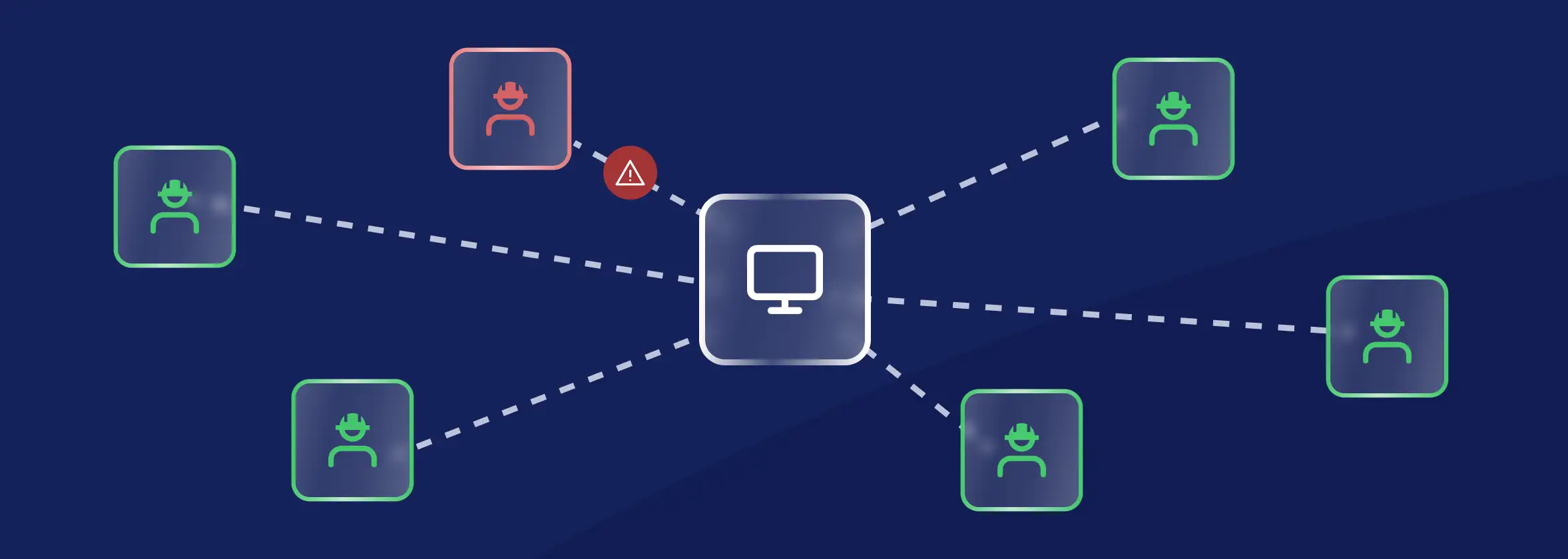
Multiple technicians are working simultaneously at different locations. Some jobs go according to plan, while others are delayed. A status update is missing, while a disruption is already being addressed elsewhere.
In such situations, it is not enough to have a safety process in place for each individual job. Managers need to be able to identify where action is required, which process has priority, and who will take the next steps.
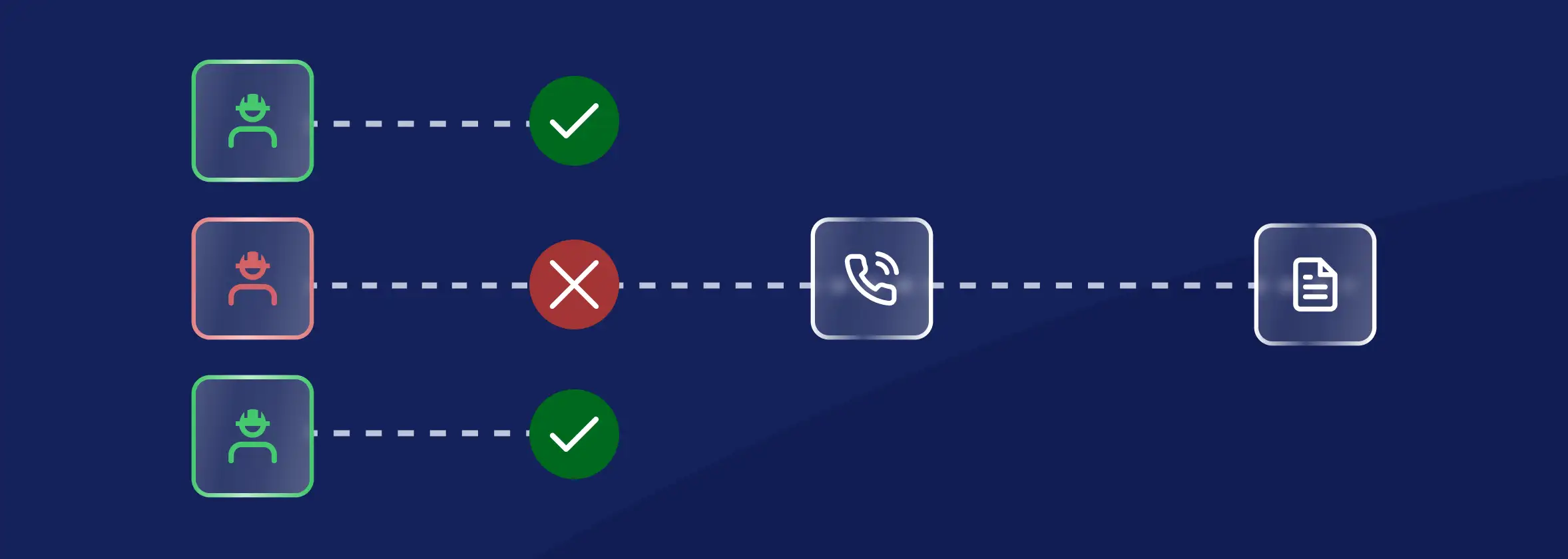
Escalation processes in field service make deviations visible according to established rules and trigger defined responses. Their resilience is particularly evident when multiple jobs are running in parallel and attention, time, and personnel resources are limited.
Key takeaways at a glance
- Parallel jobs increase the amount of information and potential deviations that managers must evaluate simultaneously.
- Standardized status updates create a shared overview of ongoing jobs.
- A missing status update is initially a deviation whose urgency must be assessed based on the context of the job.
- Escalation levels require clear deadlines, responsibilities, backups, and actions.
- Digital systems can make statuses, priorities, and responses centrally visible and traceable.
- Risk assessment and the determination of appropriate protective measures remain the responsibility of the company.
Why field service processes become critical under pressure
A single job can often still be managed over the phone. The technician checks in with their supervisor, the control center knows the location, and they can quickly follow up if there are any delays.
As soon as many jobs are happening in parallel, this informal process becomes prone to errors. Managers need to keep track of the following simultaneously:
- which personnel are on-site,
- where they are working,
- what tasks are being performed,
- whether there are specific hazards or lone working situations,
- when the next check-in is expected,
- whether a job is proceeding as planned,
- which deviations are already being reviewed, and
- who is responsible in the event of an escalation.
The problem is not just the number of jobs. It becomes critical due to the lack of connection between status, context, priority, and responsibility.
For example, a list of ongoing appointments does not indicate which job requires special attention. Conversely, a single alarm notification does not automatically show what happened, where the person is located, or what the intended response should be.
Control is only achieved when four questions can be answered at any time:
- What is the current job status?
- What deviation has occurred?
- How urgent is a response?
- Who is taking the next step?
Risks associated with parallel operations
Parallel field operations do not automatically lead to a higher security risk. However, they do place greater demands on the organization and the individuals responsible.
Information is scattered across multiple channels
Operational data is in the planning system, feedback is provided by phone, and access information is in a separate application. If those responsible have to hunt for this information in an emergency, valuable time is lost.
Feedback is assessed inconsistently
A delayed check-in could mean that someone simply forgot to sign off. It could also indicate a lack of signal, a technical fault, or an emergency. Without established rules, the assessment depends on who notices the discrepancy and that person's individual experience.
Overlapping responsibilities
Supervisors, the NOC, the control center, on-call staff, and occupational safety teams may all be involved in a single security process. If there is no clear division of roles, it remains unclear who should make contact first, when a backup should take over, and who is responsible for escalating for further help.
Critical deviations get lost among routine tasks
When all open operations are displayed in the same way, those responsible must determine their own priorities from fragmented information. As a result, a safety-critical deviation can easily look like an ordinary delay.
Responses remain difficult to track
Phone calls, messenger messages, and verbal agreements rarely form a complete chain of events. Afterwards, it is difficult to determine exactly when a deviation was identified and what measures were taken in response.
Further reading: The article explains why integrated operational data is essential for workplace safety and accountability "Documented safety in field service is no longer optional".






.webp "Deadman switch-working alone explained")
.webp "Verifying safety processes in the field")

