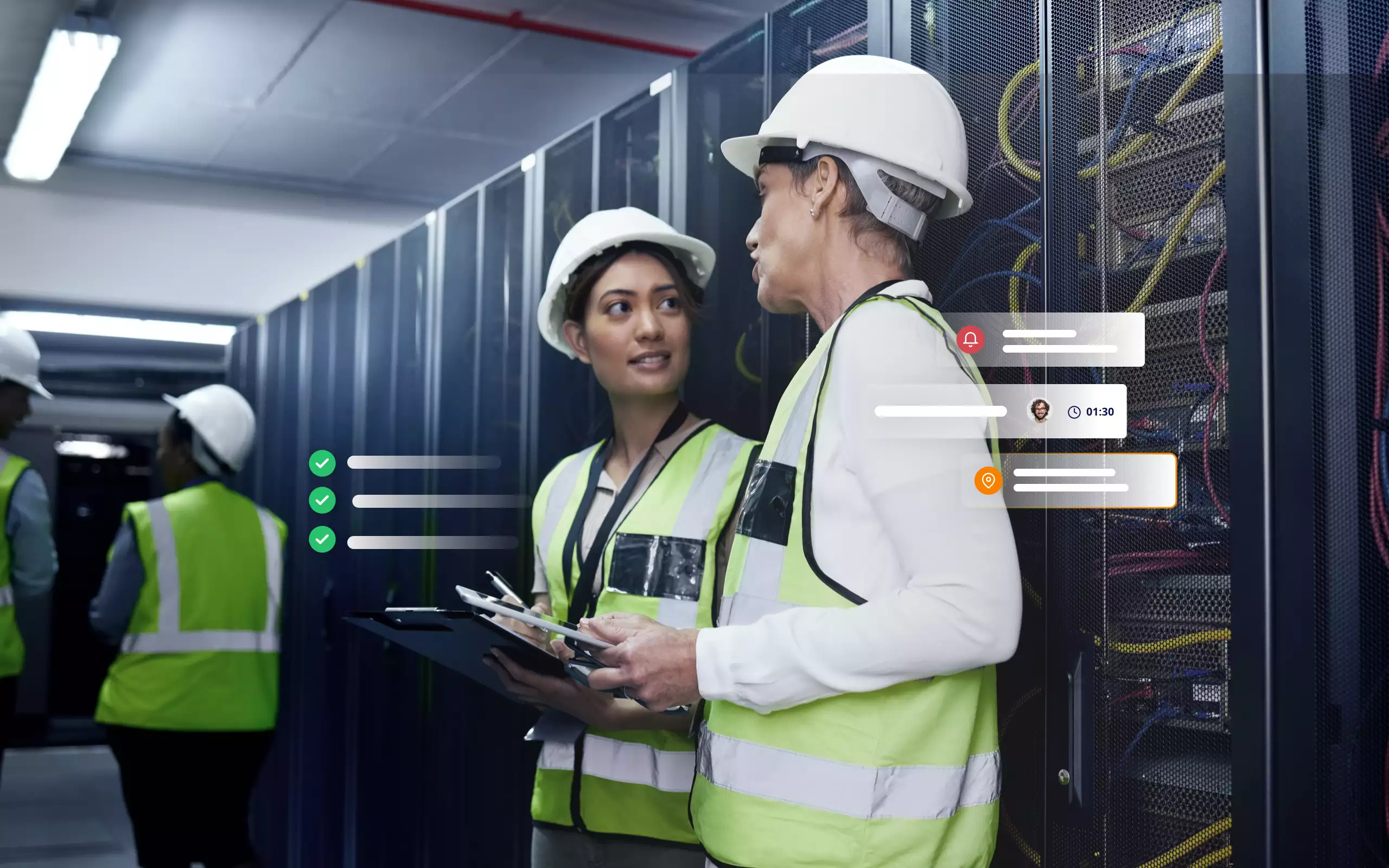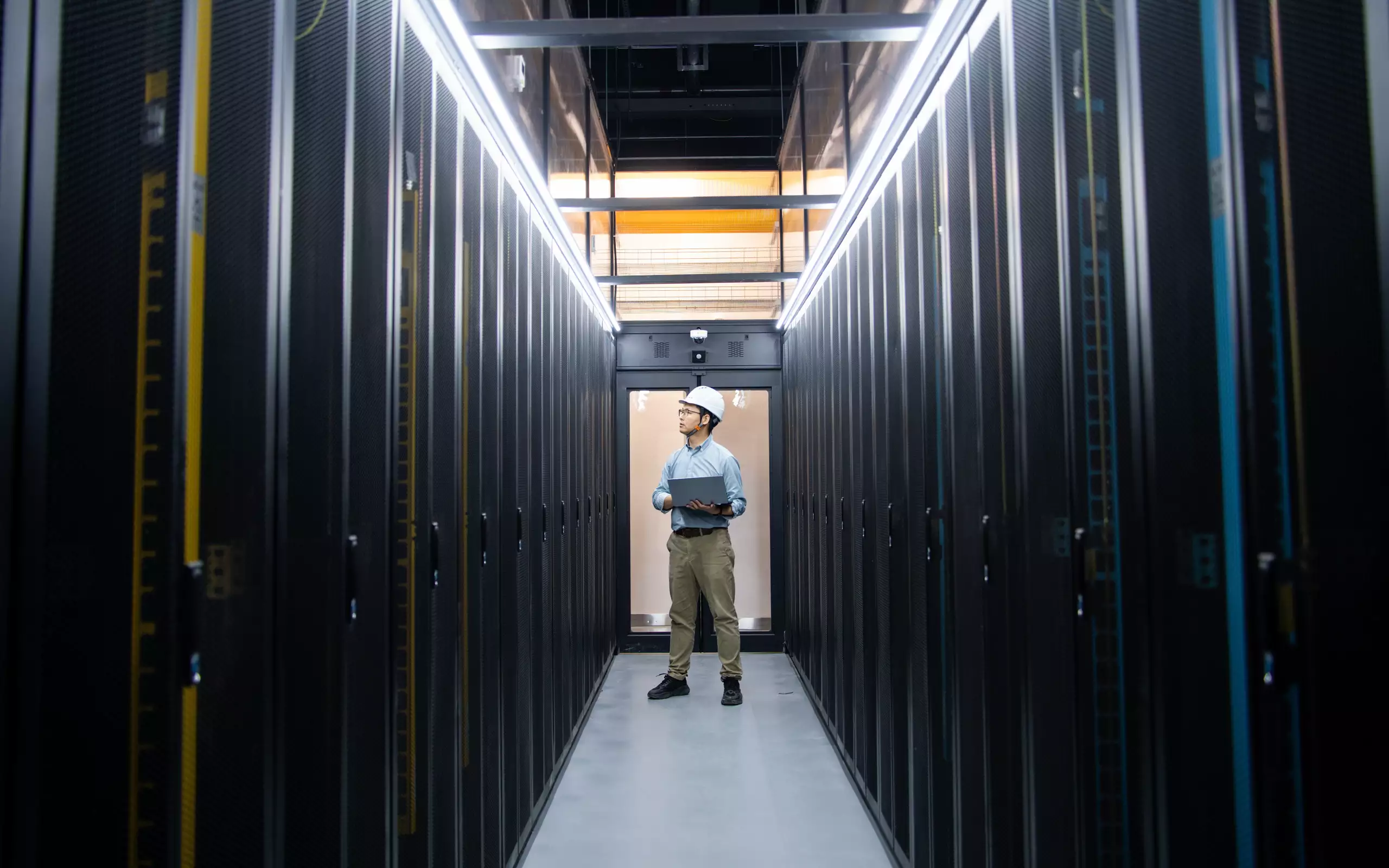
A technician travels alone to a remote location to fix a malfunction. Everything is going according to plan – until there is suddenly no more radio contact. Minutes turn into hours. It is only late that someone in the service center realizes that help is needed.
Such situations are not unique. According to DGUV around 40% of all service technicians regularly work alone; rescue workers need an average of 20 minutes longer to be on site in the event of an emergency.

Working alone = everyday life – but not a calculation error
Whether network operators, public utilities or industry – individual deployments are part of the routine. Nevertheless, security risks are often underestimated or dealt with administratively instead of integrating them organizationally and digitally.
The German Occupational Health and Safety Act (ArbSchG) and DGUV Rule 112-139 oblige companies to provide technical and organizational protection for single workers. Paper processes, Excel lists or telephone check-ins are no longer enough for this – they are prone to errors and slow down processes.
When safety slows down processes – or speeds them up
Many operational safety concepts focus on control, not efficiency. Missing feedback, outdated plans or inaccurate location data not only create risks, but also lost time in use.
This is where the paradox emerges: The more security effort is created manually, the slower teams get – and the more uncertain it becomes in an emergency.
Digital solutions such as Entry solve this dilemma. They do not make security an additional step, but an integrated part of the process.
Safety by Design: Safety as part of the workflow
1. Visibility
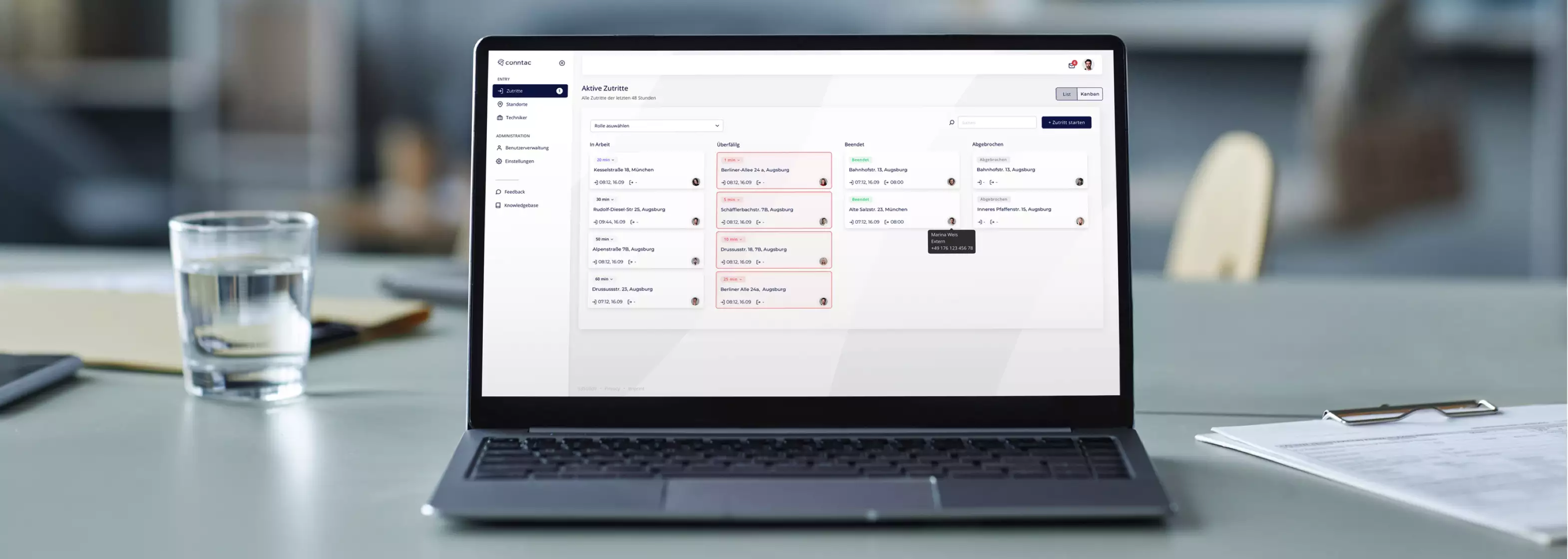
Using the Entry Dashboard, operations managers can see in real time where technicians are and whether check-ins or feedback are missing.
In the event of discrepancies, predefined processes, such as alerting or escalating to the control center, automatically take effect.
2. Automation
Deadman switching, timers and emergency call mechanisms run in the background and reduce sources of human error. An alarm is not forgotten – it is triggered when there is no response.
3. Transparency
All processes, from check-in to feedback, are documented in the dashboard. This creates traceability and simplifies the legally required risk assessment.
Digital support with Entry
With the Entry app and the Conntac dashboard, security and service processes can be combined:
- Check-ins via QR code: Locations are recorded in seconds – without any manual input.
- Deadman circuit & alerting: If there is no response, an emergency process starts automatically.
- Dashboard overview: Operational managers identify risk zones and stressed teams at a glance.
- Work in accordance with the law: Automated protocols support compliance with ArbSchG and DGUV 112-139.
Result: More security, less administration, more efficiency. What used to be mandatory is now becoming a competitive advantage.
Conclusion: Security creates trust – and efficiency
Safety in the field is not an insurance policy, but a productivity factor.
Digital solutions such as Entry show that occupational safety and efficiency are not mutually exclusive – they are interdependent.
Integrating security processes not only protects people, but also time, data, and resources.
Learn more
Download the white paper ”Safety in the field” down or start Entry for free.