


Technical field service is becoming more complex: More locations. More external service providers. More security requirements. More documentation obligations.
At the same time, many operational processes still rely on individual spreadsheets, emails, or informal, evolved daily arrangements. This often works surprisingly well for a long time. Until the first question arises that no one can definitively answer.
Who had access? Who was informed? Who was last on site? And who can trace this later?
This is precisely where the real problem arises in many organizations: a lack of structural transparency. It's not just about security. It's about accountability.

Why organically grown processes become a risk
In many technical organizations, responsibilities have evolved historically. Access rights are stored in Excel lists. Location information is scattered. Responsibilities shift between teams, service providers, and individual contacts. In daily operations, this initially seems pragmatic. However, with a growing number of locations and stakeholders, this creates operational grey areas.
Typical consequences:
- Varying levels of information
- Unclear responsibilities
- Missing evidence
- High coordination effort
- Manual inquiries in case of escalation
The problem rarely lies with individuals. The actual cause is usually a lack of structure.
Occupational insurance associations like the BG ETEM consistently emphasize that safety measures must not only be defined, but also organizationally implemented and traceably documented. This is precisely where many established processes reach their limits.
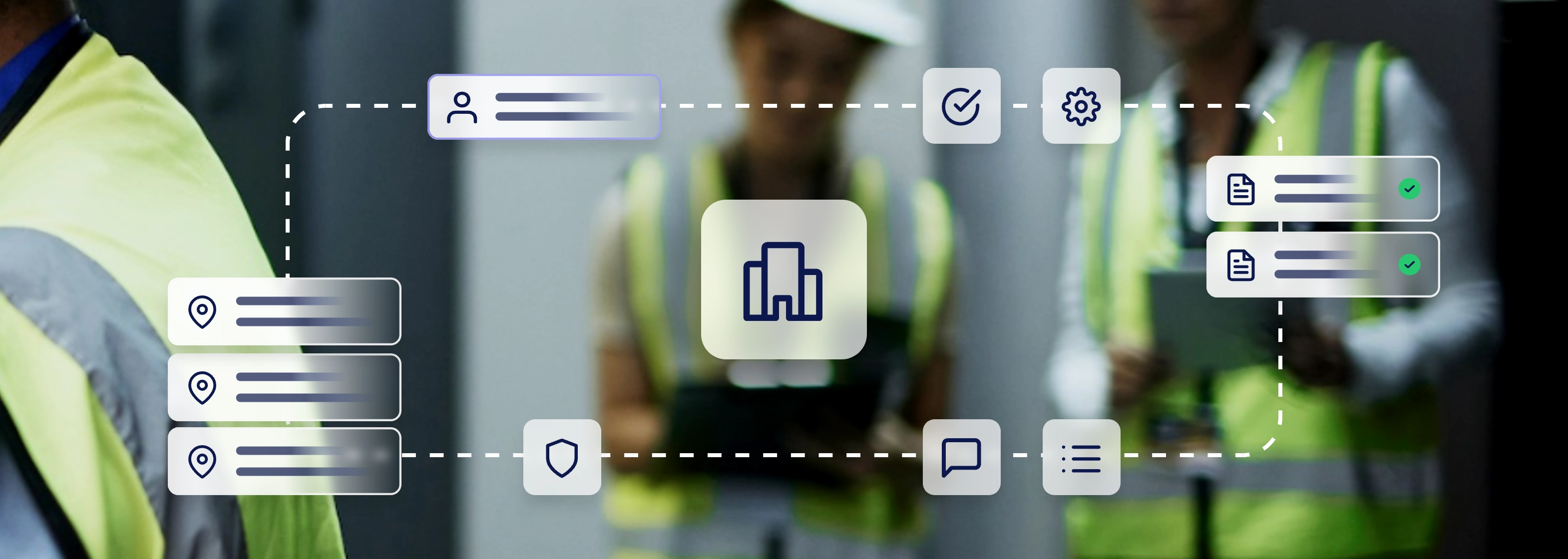
Responsibility requires traceable system logic
In technical field service, it's no longer just about deployment planning or access management. With increasing demands, it becomes crucial whether responsibilities are organized in a traceable manner.
This includes:
- Roles and permissions
- Documented access
- Location histories
- Escalation logic
- Information flows
- Notifications for deviations
The crucial question is not: "Is there a process?"
But rather: "Is it traceable later what actually happened?"
This is precisely where the difference lies between individual security measures and a true governance structure. In this context, governance doesn't mean additional bureaucracy. It means transparently organizing responsibility.
Why locations are more than just places
Each location comes with operational responsibilities.
- Who is allowed in?
- Who was there last?
- What changes were made?
- Which service providers had access?
Locations are therefore not just technical points on a map. They become organizational units of responsibility.
The larger field service structures become, the more important the history behind a location becomes:
- documented presence
- traceable access
- role and rights assignment
- changes over time
- clear identification
Responsibility doesn't end with access. It continues at the location.
Especially in distributed field service structures, this creates a key advantage: information doesn't get stuck with individuals, but becomes part of a traceable organizational structure.
Transparency reduces operational uncertainty
Governance is often confused with control. In practice, it's usually about something else: operational relief.
Clear structure reduces:
- Coordination effort
- Queries
- Information loss
- Uncertainty during escalations
- Manual tracking
This becomes particularly relevant in situations requiring a quick response. When responsibilities are not clearly visible, delays often arise not from technology, but from a lack of transparency.
Who needs to be informed? Who is responsible? Who can make decisions?
The larger the organization, the more crucial traceable role and information structures become.
Why this topic is becoming more important right now
The demands in technical field service are visibly changing. Organizations today work with:
- more external partners
- larger site structures
- increasing security requirements
- growing pressure for documentation
- more complex operator responsibilities
At the same time, many processes continue to grow organically. This increasingly creates a gap between operational reality and organizational traceability.
With increasing security and compliance requirements, clear structures for roles, authorizations, and documentation are therefore gaining more focus. The Federal Office for Information Security (BSI) regularly emphasizes the importance of organizational security measures and traceable responsibilities.
This doesn't just affect critical infrastructure-related companies. It fundamentally applies to all organizations that need to organize technical field service in a scalable way.
Structure becomes the operational foundation
In technical field service, it is increasingly no longer sufficient to manage individual security measures or isolated processes.
What becomes crucial is whether responsibility is organized in a traceable manner. Who has access. Who is informed. The history of a location. And how transparently processes can be traced later.
This is precisely where the true structural foundation for scalable field service is formed. Not as an additional process, but as part of daily operational organization.
FAQ: Governance in Technical Field Service
What does governance mean in technical field service?
Governance describes the organizational structure behind field service processes. This includes roles, permissions, responsibilities, documentation, and traceable procedures.
Why are Excel spreadsheets often no longer enough for field service?
As the number of locations, service providers, and security requirements increases, disparate information and missing proofs quickly emerge. This makes manual processes difficult to scale.
Why is location history becoming more important?
Today, locations are not merely technical sites, but organizational units of responsibility. Documented access, changes, and responsibilities are therefore becoming increasingly relevant.
What distinguishes governance from individual security features?
Individual features solve isolated problems. Governance, however, describes the entire structure behind responsibilities, access, and organizational traceability.
Why is this topic gaining importance now?
Increasing security requirements, external service providers, and growing documentation pressure raise the demands on transparent field service structures.
Those who wish to structure roles, locations, and responsibilities can Entry Free try for free.






.webp "Deadman switch-working alone explained")
