The star is waiting
"We saved the star for you."
Markus is still taking off his jacket in the hallway when his daughter holds out the golden tree topper. In the living room, the first strings of lights are glowing, and there are cookies and two cups on the table. "I thought you might start without me." – "We did," says his partner, Julia, pointing to the almost fully decorated tree. "But the most important part is still missing."
Markus laughs, takes the star, and steps onto the small stepladder. An hour ago, he was still alone at a technical site, several kilometers away, wearing work boots instead of slippers and with one last item on his list. Now, the job is done – successfully and safely. That is exactly why he can start his evening off.

A short while ago: The job ends with a check-out
At the site, Markus packs up his tools and takes one last look around. The planned work is complete. Before leaving, he takes out his smartphone and checks out via the app.
For him, it is a quick task. For Sophie in the NOC, it means the current access is finished and the status is accounted for. Markus checks his watch. Still enough time before someone at home decides to finish decorating the tree without him.

Checking out is the final step of a process that began the moment he arrived at the site.
During the job: Checking in before someone has to ask
A little earlier, Markus is working alone on-site. It is quiet, and nothing unusual is happening. Then, his smartphone signals: the scheduled check-in interval is expiring.
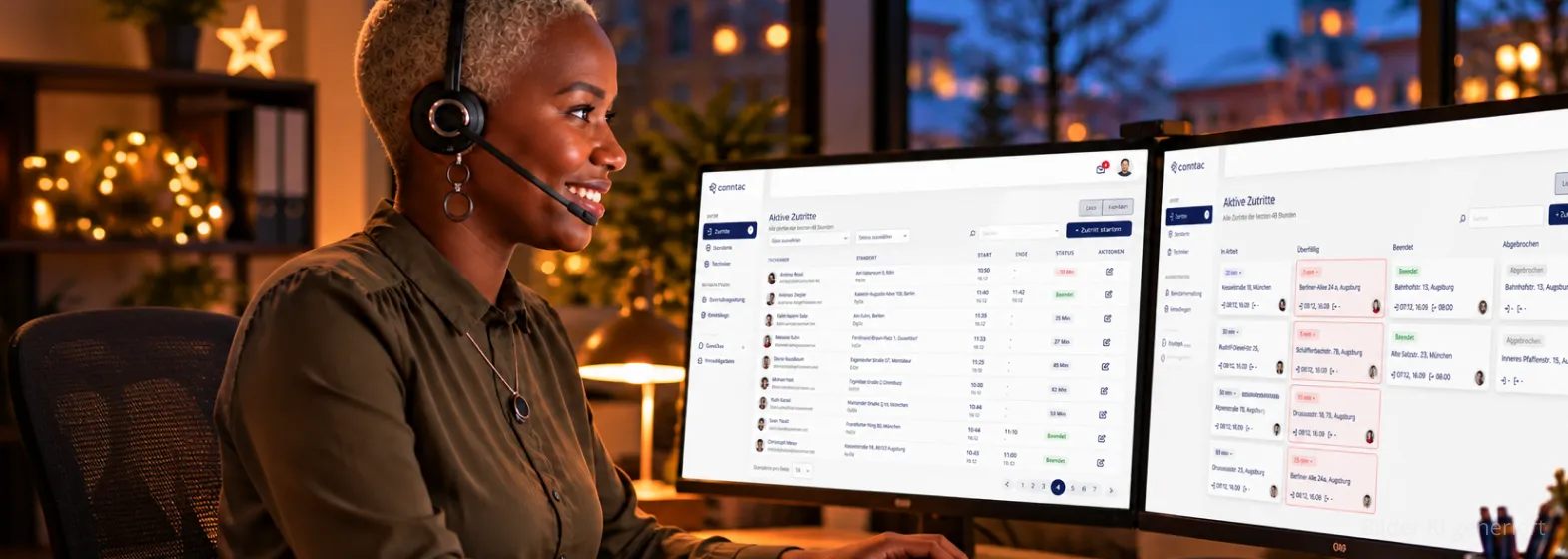
Markus confirms the scheduled check-in and continues working. The process takes only a few seconds. In the NOC, Sophie has an overview of all active site access. She doesn't need to ask if everything is okay – the check-in has been completed.
Precisely because nothing is happening, this step seems inconspicuous. That is exactly where its value lies: it is pre-determined when a check-in is expected and what happens if it is missed.
At the start: Clarity on who is working where
Going back further, Markus stands in front of the site and opens the app. He sees the site authorized for him and the information provided for the visit. Then, he starts his check-in.
This makes it clear that he is on-site. Sophie can see which access sessions are currently active in the Network Operations Center. Markus, in turn, knows exactly which procedures are in place for check-in, status updates, and completion.
Neither of them has to improvise during the assignment regarding what a status update should look like or who would need to react in case of doubt. The fundamental steps are already defined.
Back at the Christmas tree
"A little to the left," says his daughter. "More?" – "No. Back again now."
After a few attempts, the star is finally where it belongs. Markus climbs down from the ladder and looks at the tree. The last job of the day already feels far away.
During his work, it was just a few clear steps for him: check in, work, report status, check out. For the responsible department, this creates an overview: Who is at which location? Have the scheduled status updates been received? Is the access completed?
What does this mean for technical management, the NOC, and field service?
Operational excellence in technical field service is often reflected in exactly these unspectacular processes. When employees work alone at technical sites, responsibilities, status updates, and reactions must be clarified in advance.
Important questions include:
- Is it clear who is currently at which location?
- How are check-ins and check-outs handled?
- At what intervals are status updates expected?
- Who sees it if a status update is missed?
- What measures do the operational procedures provide for in that case?
- Is it traceable after the assignment is finished that the access has been terminated?
Digital processes can help make ongoing access visible and keep agreed-upon status updates traceable. If a scheduled update is missed, this can be made visible on the dashboard and trigger a security notification. The subsequent steps depend on the established operational procedures.
Good processes do not need to stage an emergency for this. Their value is already evident in the fact that it is clear in everyday work who receives what information and when.
Michael's perspective
"In technical field service, it is often the small, recurring steps that ensure reliability.
When check-in, status updates, and check-out are clearly regulated, both the person on-site and the responsible department have a traceable workflow.
The decisive factor is that it is determined in advance what happens if this process does not go as planned."
- Dr. Michael Faath, CEO Conntac
A question to consider
How do you ensure that lone workers check in, and who takes action if they fail to do so?


Markus and Sophie are fictional characters. The procedures described illustrate typical processes regarding access, check-ins, and lone working. Specific operating procedures and functions are verified against the current Entry product version prior to publication.
Images: AI-generated.